"Brownfield" tends to sound harder than it is. If you're picturing months of downtime and a torn-up floor just to get robots running in a facility that's already operating, here's what actually happens, and three myths worth retiring.
Myth #1: You need to redesign your floor plan first.
Not with SLAM-based localization. Idealworks robots don't rely on floor markers, magnetic strips, or fixed paths. There's nothing to install into the building itself. Robots learn the space as it already exists, which means the "redesign the floor" step simply isn't part of the process.
Myth #2: New robots can't share space with your current fleet.
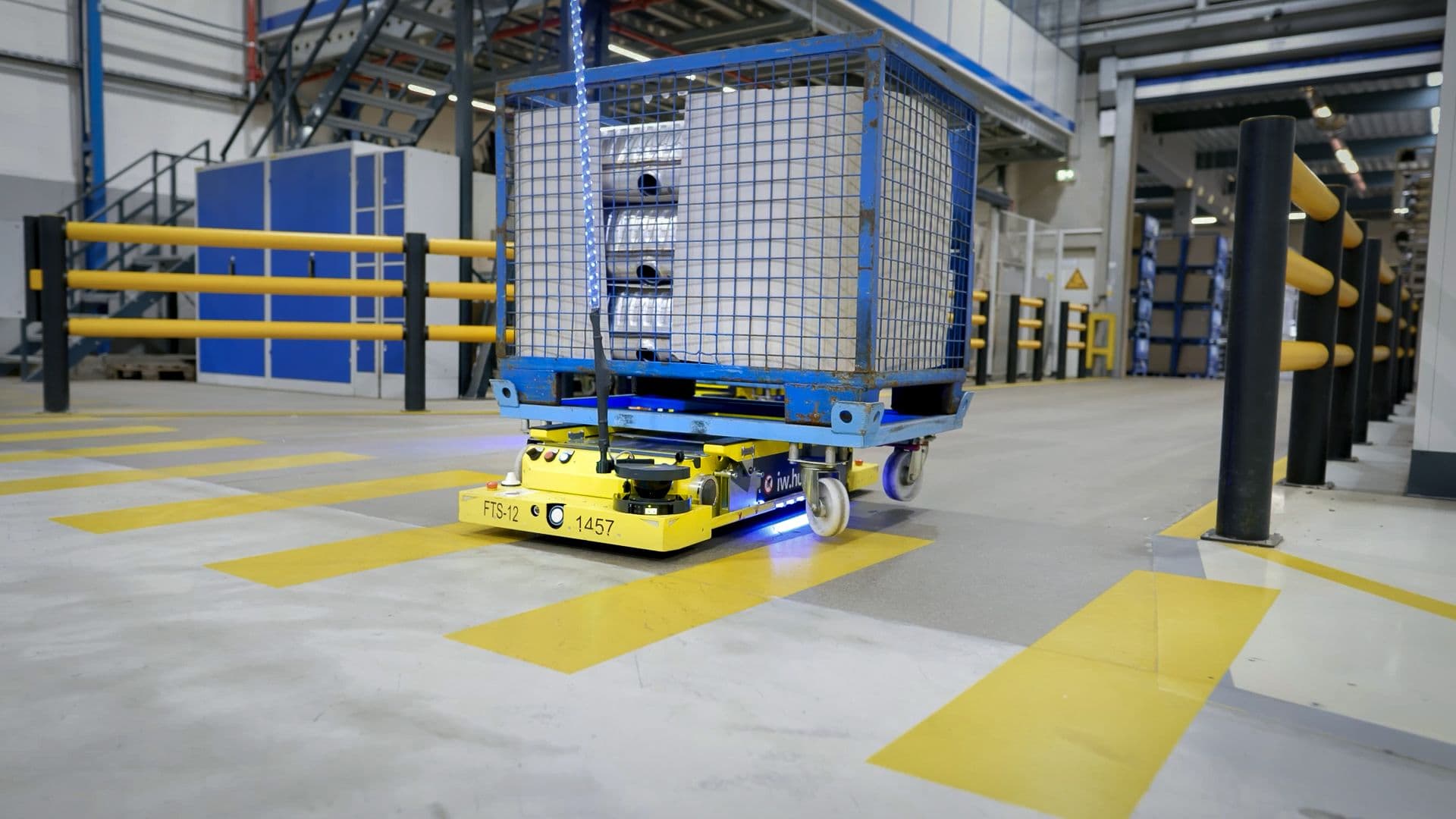
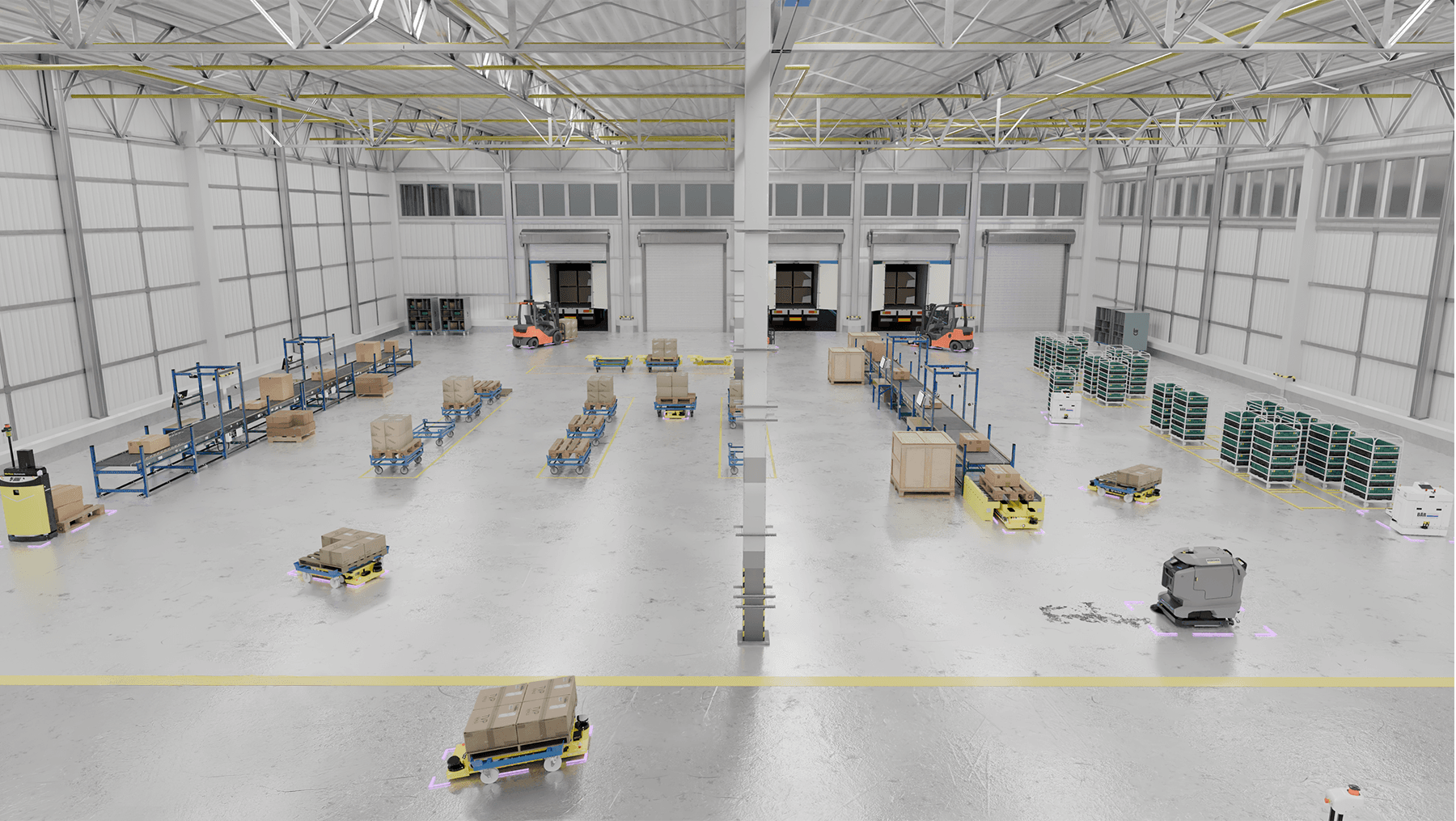
They can, from day one. Robots operate in live mixed traffic alongside forklifts, pedestrians, and existing AGVs – no cordoned-off lanes required. And if you already run AMRs or AGVs from other vendors, Idealworks OS coordinates everything over VDA 5050, so new and existing fleets dispatch from one system instead of operating as separate islands.
Myth #3: Retrofitting means pausing production.
It doesn't have to. A typical retrofit follows four phases: 1) map the existing floor and workflows, 2) validate fleet sizing and routing in simulation, 3) integrate the new robots alongside your current fleet, 4) then scale once it's proven out. Your current operation keeps running through all four.
The result: deployment in weeks, not months, on the mixed-traffic floor you already have. Contact us to find out more about this.